
What affects the cost of custom baby sleep sacks?
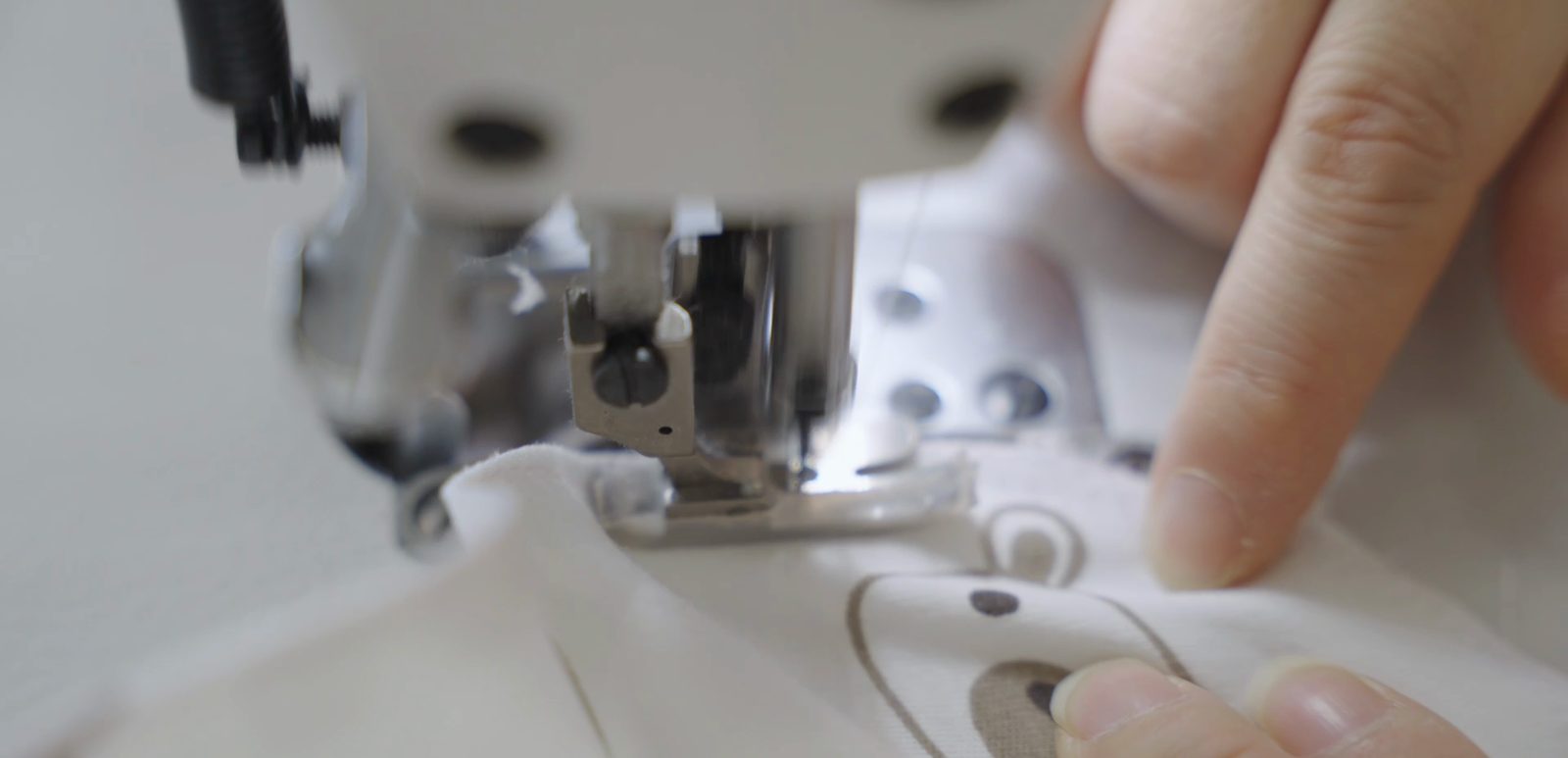
Cost is the sum of eight components: shell fabric, wadding and lining, zip and trims, cut-and-sew labour, print or dye, packaging, testing, and freight. The largest swings come from layer structure, zip specification, the number of colourways and prints, and how finely the order is split across sizes.
The cost stack
Every sleep sack quote is built from the same eight lines. Knowing which line a change touches is the difference between negotiating and guessing.
| Component | What drives it | How much it moves |
|---|---|---|
| Shell fabric | Fibre, weight, weave, stock versus woven for you | Large |
| Wadding and lining | Layer count and wadding weight, which is also the TOG lever | Large |
| Zip and trims | One-way or two-way, length, puller, guard, poppers | Medium |
| Labour | Number of operations: quilting, binding, topstitch, foot construction | Medium to large |
| Print or dye | Method, number of colours, placement versus all-over | Medium, per colourway |
| Packaging | Polybag, band, header card, printed box | Small per unit, large as a minimum |
| Testing | Which markets, which standards, how many styles covered | Fixed cost per style |
| Freight | Volume, not value: a quilted sack takes more carton space | Medium |
The levers, in order of impact
1. Layer structure. A single-layer jersey sack and a quilted three-layer sack are not the same product at any volume. If the TOG target can be met with fewer or lighter layers, that is the biggest single saving available — and the one that most affects how the product feels.
2. How many colourways and prints. Each colourway carries a dye or print setup and therefore its own minimum. Six prints across one style can cost more in setup than the sewing of the order.
3. Size fragmentation. Four sizes in three colours is twelve combinations. If the minimum applies per combination, a broad range quietly multiplies the order.
4. Zip specification. A two-way zip with a guarded puller is worth paying for on a product used at night, but it is a real cost line, not a free upgrade.
5. Packaging. Cheap per unit, expensive as a minimum. A printed box on a small first order is often the reason the order is not economic.
Why two quotes for “the same” sleep sack differ
| Reason | What to check |
|---|---|
| Different fabric weight | GSM and composition, in writing, not “cotton” |
| Different layer count | Shell, wadding, lining — and the TOG basis |
| Different zip | One-way versus two-way, puller type, guard |
| Different test scope | Included or excluded, and which market |
| Different incoterm | Ex-works versus FOB versus delivered |
| Different payment terms | Deposit percentage and balance timing |
Two quotes are only comparable when the spec sheet, the test scope and the incoterm match. Otherwise you are comparing a product with a different product, and usually the cheaper one is cheaper because something is missing.
How to compare properly
Send the same spec sheet to every supplier, with the six fields that move cost fixed: layer structure, zip, size set, colourways, print method and packaging. Then ask each to quote two versions — the spec as written, and the spec with one variable reduced. That second number tells you what the feature is actually costing you, which is the only basis for a decision about whether to keep it.
Four questions that change the number fastest
When a quote comes back higher than expected, these four questions locate the reason in one exchange rather than five:
- Which line is the largest? Fabric, wadding or labour. The answer tells you whether to redesign the product or renegotiate the order.
- Is the fabric stock or made for us? A made-to-order quality carries a mill minimum and a lead time that a stock quality does not.
- How many set-ups are in this order? Count colourways, prints and sizes. Each one is a set-up, and set-ups are what a small order actually pays for.
- What is excluded? Testing, packaging, freight and payment terms. A quote is only comparable when you know what sits outside it.
Ask these four before asking for a discount. A discount on an unclear quote moves the number without moving the cost, and it usually returns later as a change order.
Where not to cut
The zip puller and its attachment, the care label content, and the test scope. The first two are small-parts and labelling risks that produce recalls rather than complaints; the third is the difference between a product you can sell in a market and one you cannot. Saving on any of the three is borrowing against a cost you will meet later, with interest.
| Variable | Version A | Version B | Effect |
|---|---|---|---|
| Layer structure | Single jersey shell | Shell + 120 gsm wadding + lining | Largest single move |
| Colourways | 1 stock shade | 4 dyed shades | Four set-ups, four minimums |
| Sizes | 2 | 4 | Doubles cuts and line set-ups |
| Zip | One-way, standard puller | Two-way, guarded puller | Real cost, real function |
| Pack | Polybag | Printed box | Small per unit, large as a minimum |
Version B is not “Version A with extras”. It is a different product commercially: the same pattern, four times the set-ups. Illustrative values, not a stock product — they show the level of detail a spec sheet needs.
What we can put in front of you
Evidence for the points above, in the form a buyer can check rather than take on trust:
- Quote split by lineFabric, making, trims, print, packing, testing and freight shown separately, so a change can be traced to a line.
- Two-version quoteThe spec as written, and the spec with one variable reduced. The difference is what the feature costs.
- Test scope attachedWhich tests are included, for which market, and whether they are per style or per colourway.
From the question to a quote
- 1This guide — the decision behind the question, in the abstract.
- 2Baby sleep sacks — the construction, fabric and size specifications it applies to.
- 3All product lines — if the programme spans more than one line in the same shipment.
- 4Request a quote or a sample — send the fabric, the size set and the expected quantity.
Sources and standards
- 16 CFR Part 1610 — Standard for the Flammability of Clothing Textiles (eCFR)
- 16 CFR Part 1615 — Standard for the Flammability of Children’s Sleepwear, Sizes 0 Through 6X (eCFR)
Links go to the issuing body’s own publication. Where a rule differs by market, the market is named in the text above; nothing here is a statement that a specific product is certified.
Frequently asked questions
Is a higher TOG more expensive?
Does print cost more than a dyed solid?
Does adding one more size really cost much?
Related
Send three things, get a real answer
Fabric or construction direction, the size set you are planning, and the quantity you expect for a first order. Approximate is fine — the point is to quote against your programme rather than against an average. If you already have a reference sample or a spec sheet, send that instead and we will work from it.