
Quality control and testing for baby textiles
Baby textiles carry safety, labelling and attachment obligations that a supplier cannot talk its way out of. What follows is what we check, what document each check produces, and — just as important — what we will not claim without evidence.
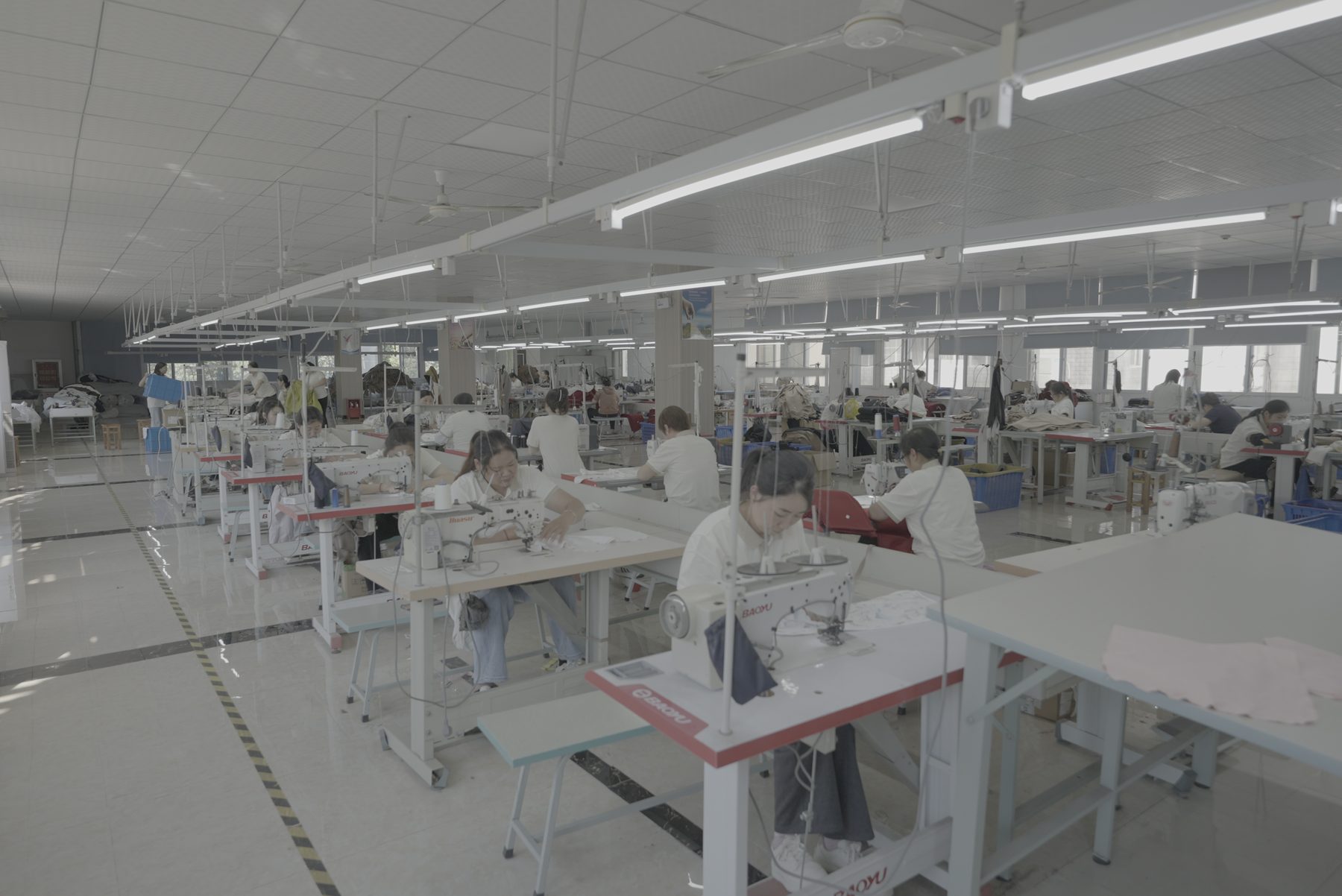
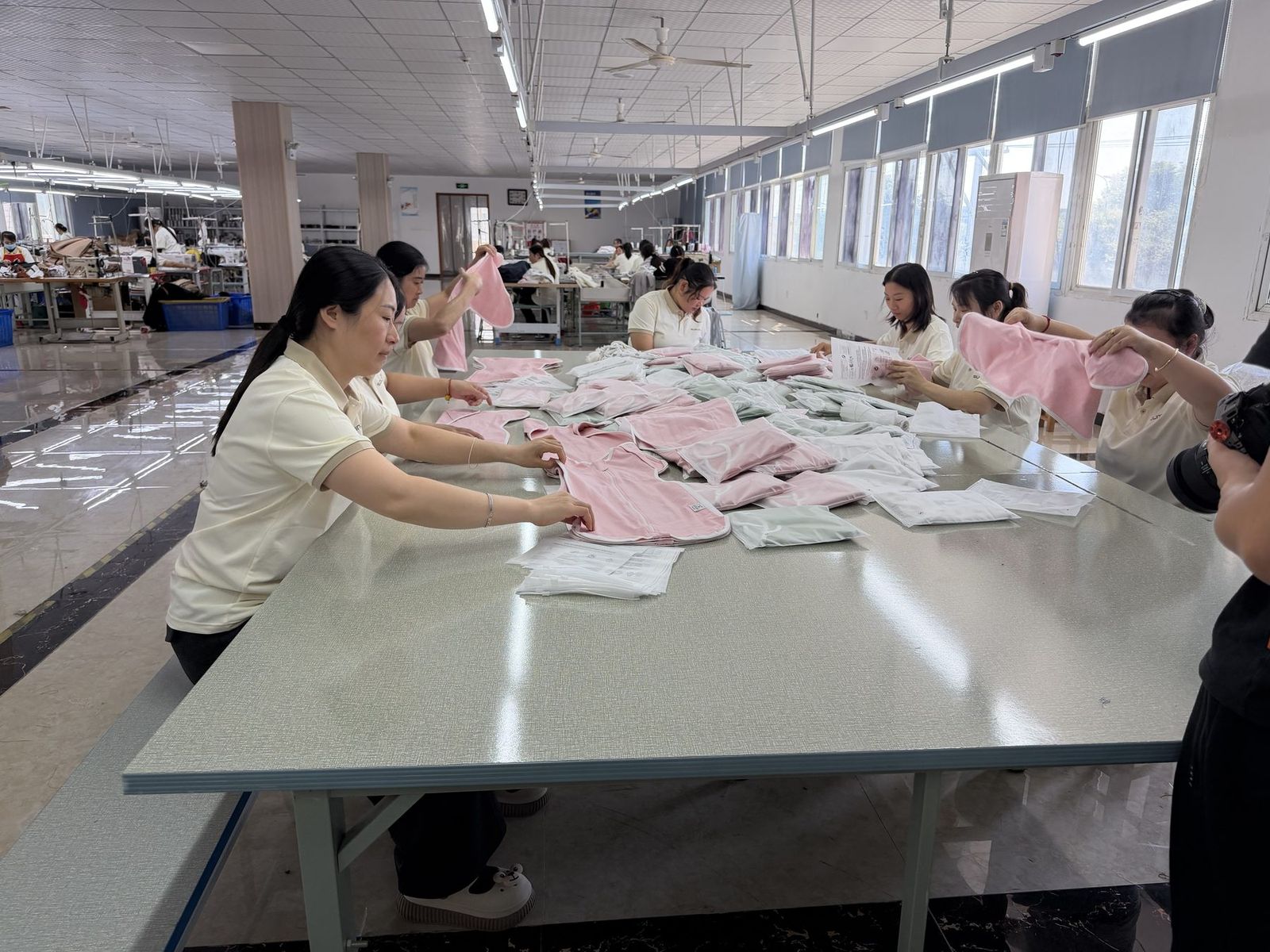
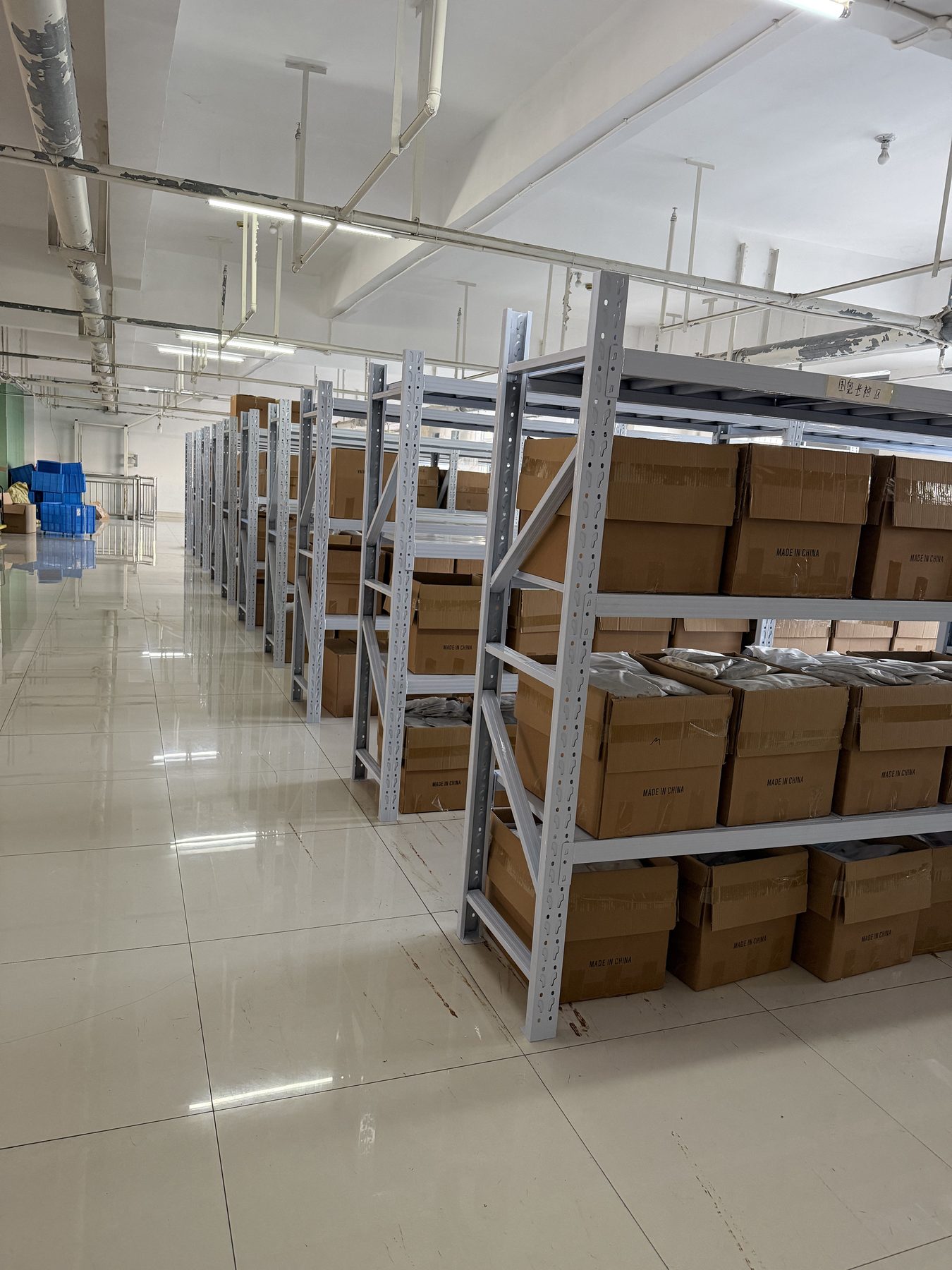
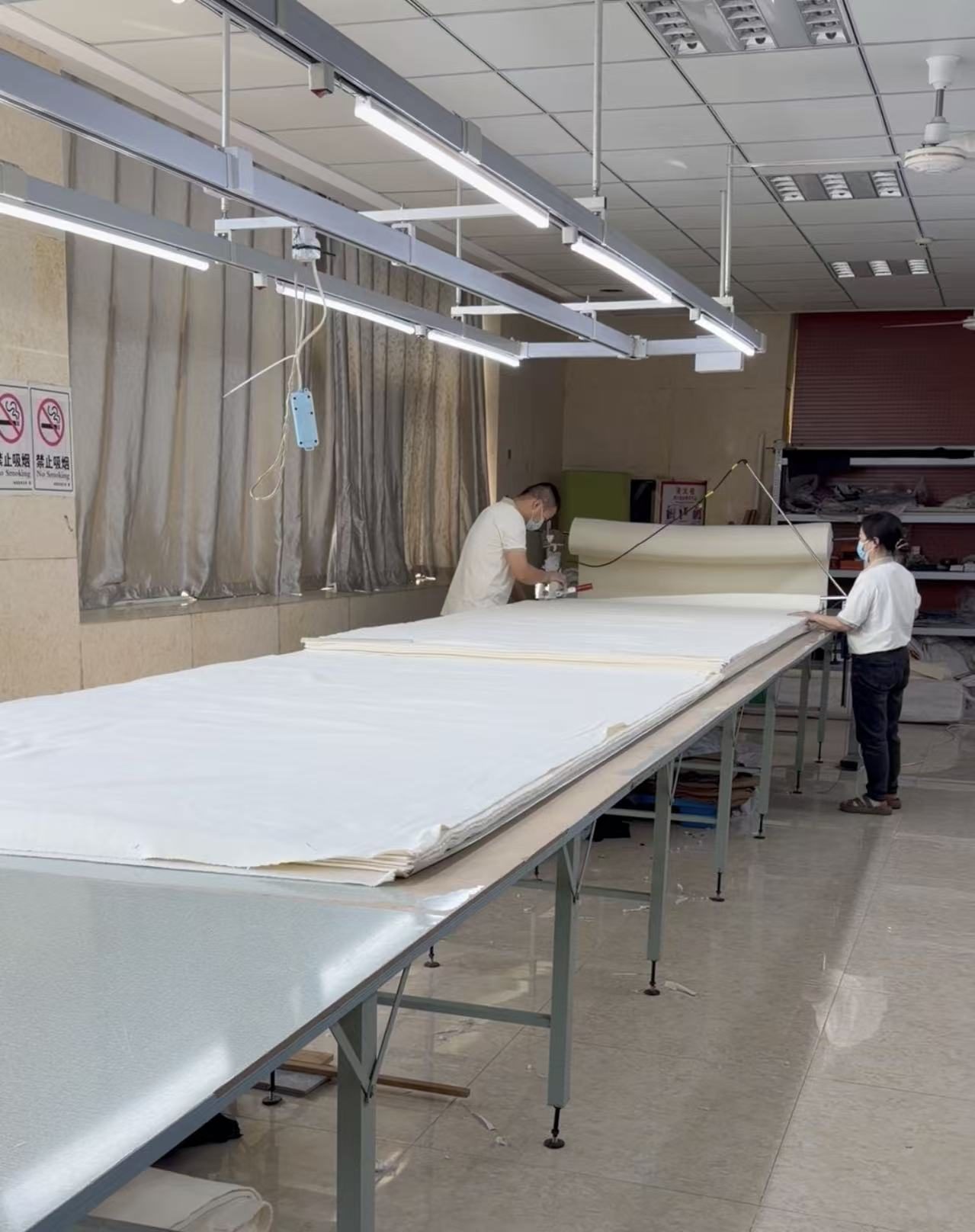
The floor the orders run on: sewing, laying and marking, and the warehouse where cartons are picked before inspection. Photos show scale; the eight checks above show the document trail.
Eight checks and the record each one leaves
| Check | What is verified | Document |
|---|---|---|
| Measurement | Every point of measure checked against the approved chart, with the agreed tolerance. | Measurement report per size |
| Fibre and weight | Composition and fabric weight verified against the specification. | Fabric record against the lot |
| Colour | Shade checked against the approved standard under defined lighting. | Colour approval record |
| Construction | Seams, closures, trims and attachments checked against the sealed sample. | Inspection sheet per batch |
| Attachments | Zips, poppers, ribbons and small parts checked for security and sharp edges. | Attachment check record |
| Wash behaviour | Shrinkage and appearance after the agreed wash cycle, where a record exists for the fabric. | Wash test record and the conditions used |
| Needle detection | Every garment passed through a metal detector before packing; a broken needle fragment inside a baby garment is the defect no buyer forgives. | Needle-detection log and the broken-needle record |
| Packing | Polybag, label position, pack count and carton marks. | Packing list and carton audit |
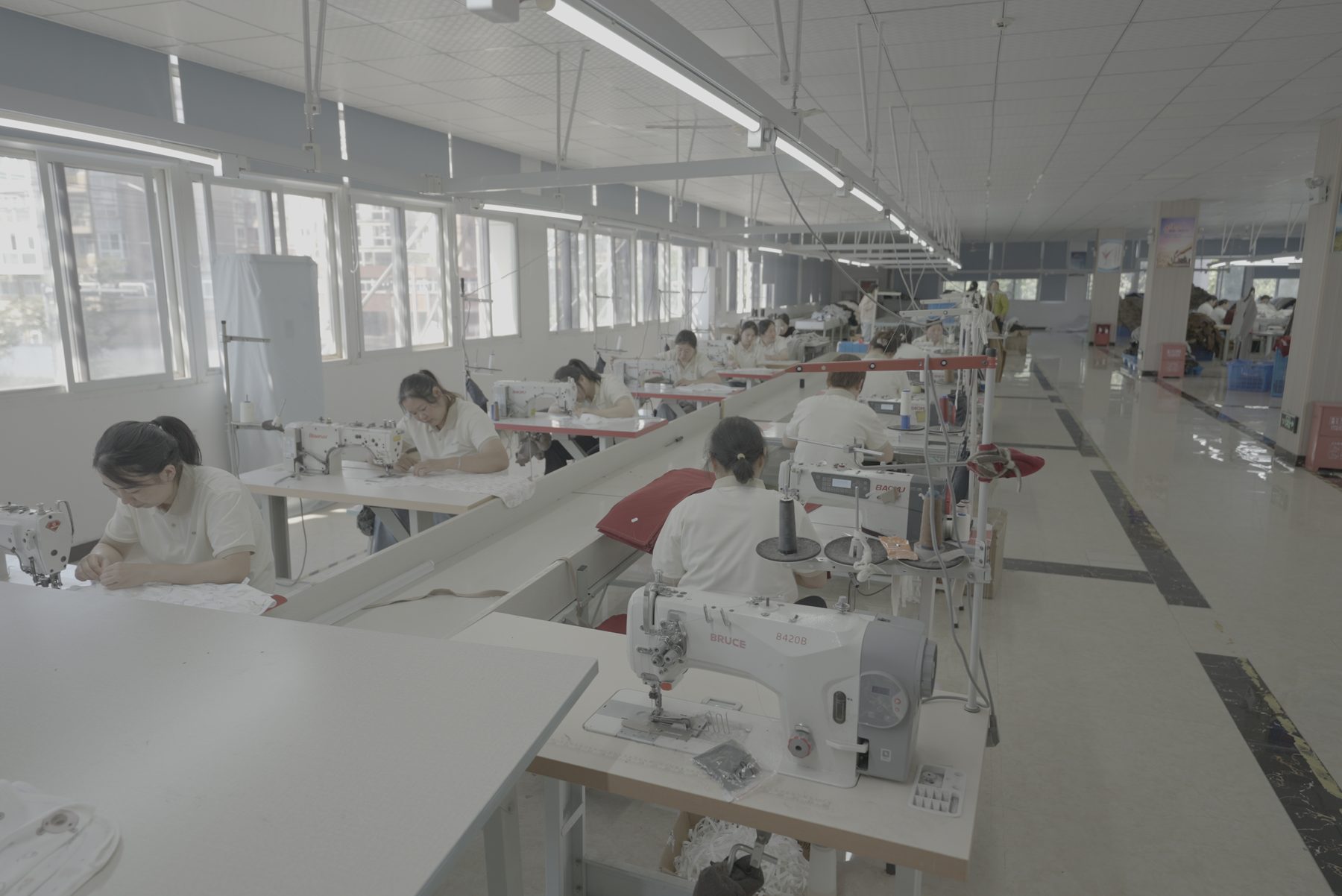
The floor the orders run on
Photographed during live runs on the production floor our baby textile orders move through — sewing lines, fabric laying and marking, spreading, and the finished-goods warehouse where cartons are batch-picked before inspection. What a photo can show is scale and discipline; what it cannot show is the document trail, which is why the eight checks above exist. For larger orders, buyers can audit this floor in person or through a third-party inspection company.
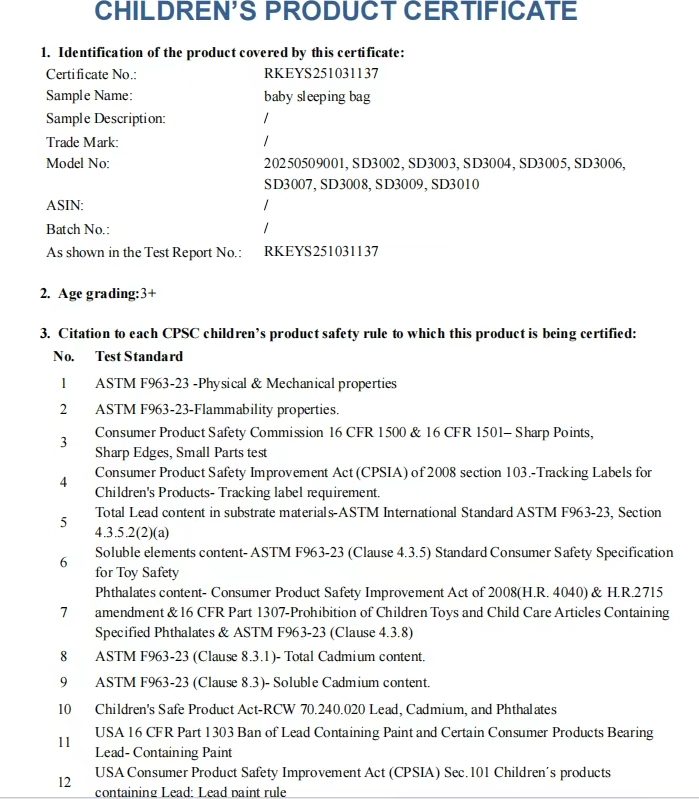
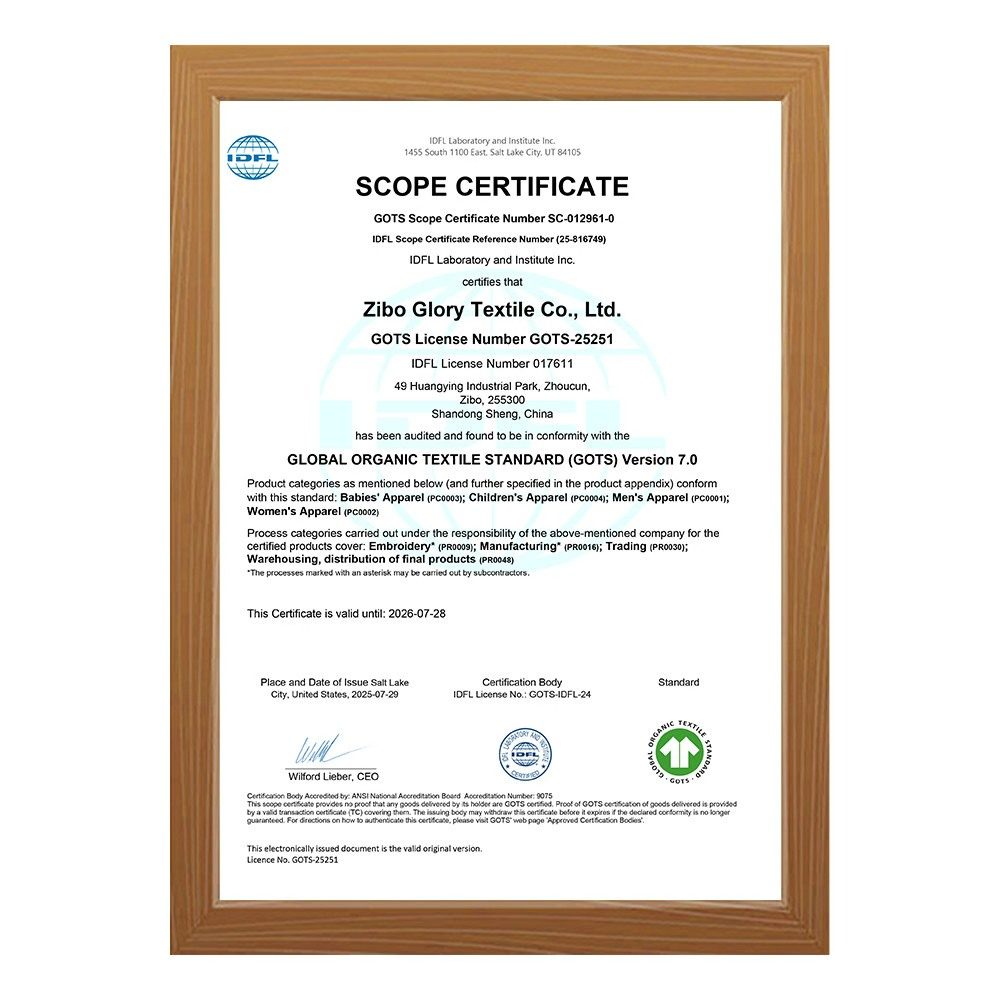
On certificates. A GOTS certificate, an OEKO-TEX certificate, a children’s product certificate and a test report are four different things with four different scopes. Presenting them as one interchangeable badge is a common shortcut and a bad one: the buyer finds out at customs or at the retail audit, and by then the container has sailed. We name the document, the holder and the scope.
Certificates on file
The documents below are live certificates behind the fabrics and styles we ship, shown the way we believe certificates should be shown: the holder named exactly as issued, the scope stated, and the validity visible. Two of the three are held by our supply-chain partners — the mill and the fabric supplier, which is who certification attaches to — and we would rather show that plainly than crop a logo out of context. Ask us to confirm which certificate covers the style you are buying before you rely on any of them.
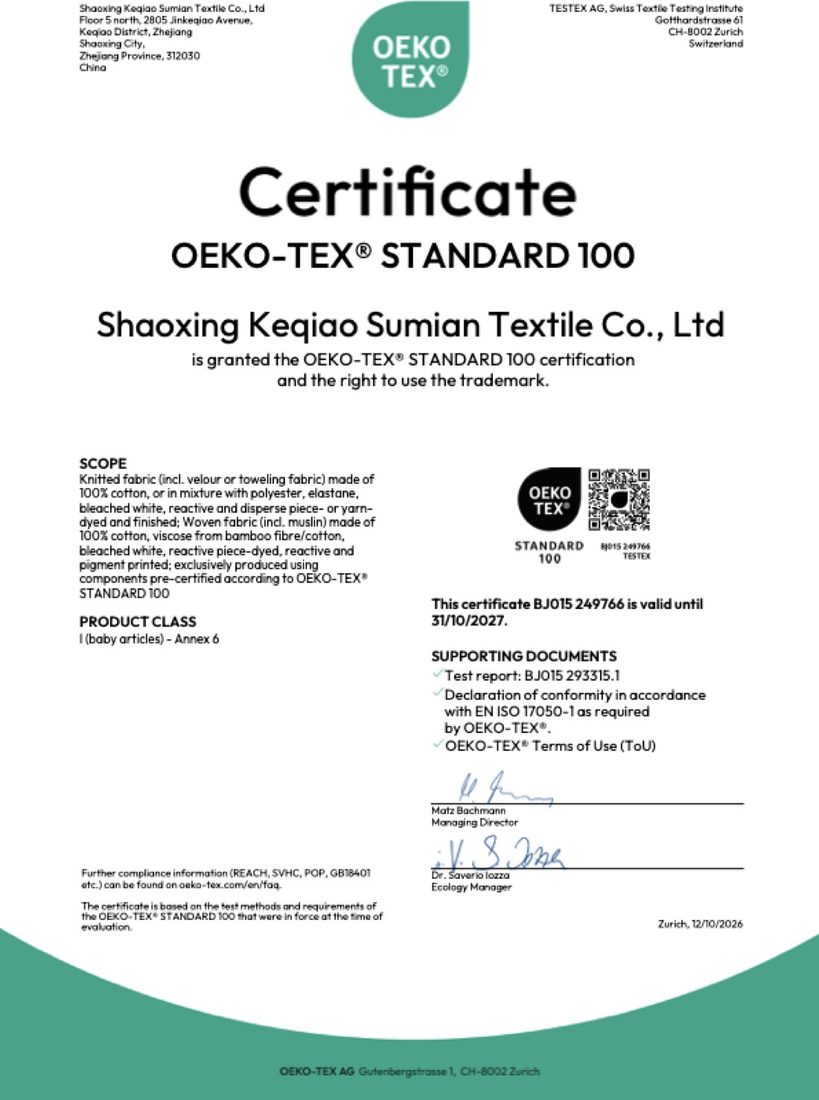
Download the OEKO-TEX certificate (PDF)
The document list buyers actually ask for
Which documents apply depends on the style, the fibre and the destination market, and we confirm the route per order. The ones that come up most often, so you know what a sourcing conversation here looks like: a children’s product certificate and the lead and phthalates testing behind it for the United States, the children’s sleepwear requirement where the style is sleepwear, small-parts and attachment pull testing, EN 71 and REACH routes for Europe, fibre and care labelling per market, and, where the fibre chain supports it, an OEKO-TEX or GOTS certificate held by the mill or the fabric supplier — stated with its holder and scope, never as a badge of our own.
Why attachment security gets its own row
In March 2026 a US recall of a well-known sleep suit turned on a zip puller that could detach and become a small-part choking hazard. That recall was specific to a product and a batch, not a judgement on the brand’s whole range — and that is exactly the point. The failure mode is small, the consequence is large, and the only defence is a recorded attachment check plus a batch trace that limits the scope.
Structure and safety, per product type
The UK Office for Product Safety and Standards issued a safety alert in October 2026 on baby sleeping bags, citing overheating and suffocation risk where a bag has a hood or no armholes. The alert states that dedicated swaddle products are not in its scope. The practical consequence for a buyer is that a sleep sack for unsupervised cot sleep and a stroller footmuff are not the same product and should not share a specification.
Paediatric guidance also calls for swaddling to stop at the first sign of a baby attempting to roll. That belongs in the care instructions and the packaging copy, not only on the website.
Questions buyers ask
Are you GOTS or OEKO-TEX certified?
Who is named on the test report?
What happens if inspection fails?
Can I use my own inspection company?
Do you keep records across repeat orders?
What about batch traceability?
Need a document list for your market?
Tell us the style and the destination. We will send the document list that applies, and say which items we can supply for that order.