
Baby pillow supplier for toddler and nursery programmes
A baby pillow is specified by cover fabric, fill weight, size and age grade — and the age grade is decided before anything else, because it drives the safety route. We supply washable toddler and nursery pillows with stated fill weights, removable covers and compressed or boxed packing. Orders are wholesale baby pillows under your own brand.
What the styles look like
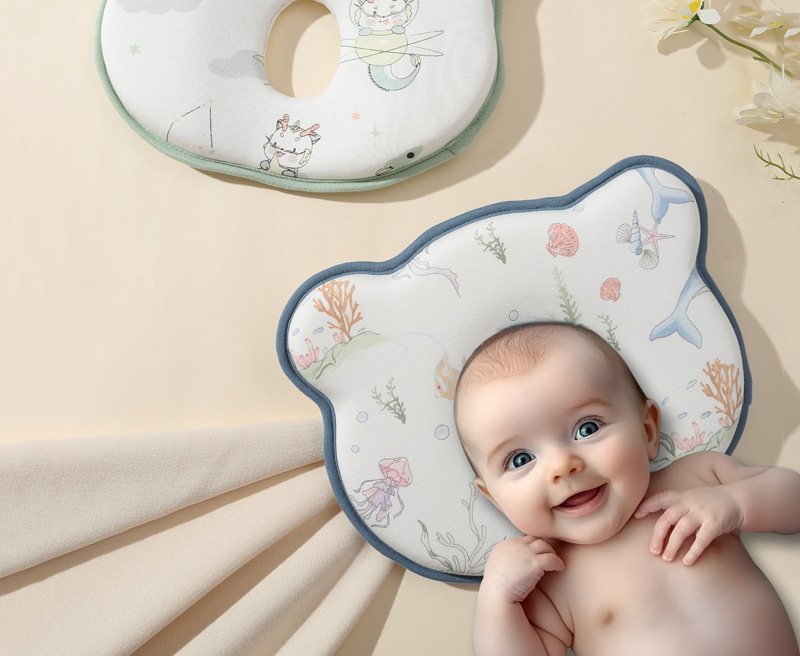
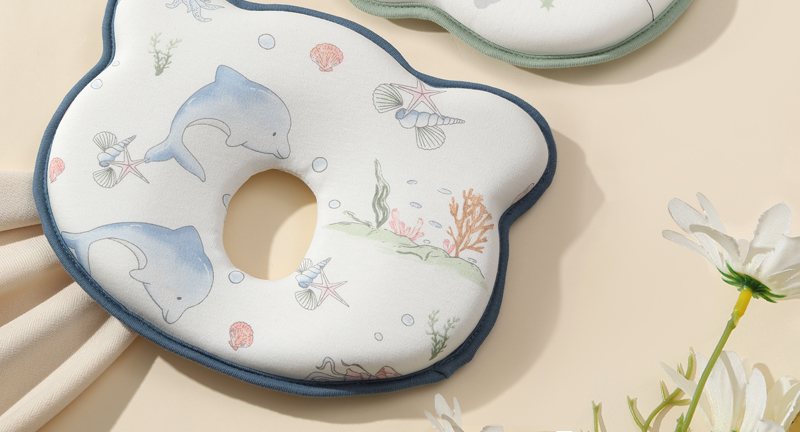
Pieces from the current range, photographed as examples. Prints, colourways and packaging shown are samples of what we run — your own artwork is applied at the sampling stage.
Three decisions to make before the pattern
A pillow is the category where the market rules bite hardest, so the sequence matters: age grade first, claims second, construction third.
| Decision | Why it comes first | What we put in writing |
|---|---|---|
| Age grade | Soft bedding is not placed in a crib with an infant under 12 months in US guidance; the grade decides the safety route | The age grade on the spec and the label, per market |
| Claims | Prevention or developmental claims on a pillow are restricted in most markets | No medical or developmental claims on our labels; wording agreed before print |
| Fill weight and loft | Firmness and recovery are physical measurements, not descriptions | Fill weight in grams, loft after compression, recovery after transport |
The construction is the easy part. A rectangular or contoured pillow in a washable cover is a straightforward make once the first two rows are settled.
What we specify on the order
| Point | Why it matters |
|---|---|
| Cover fabric | Cotton, muslin, a stated blend or a 3D air-mesh knit for airflow; weight quoted in gsm and verified on sample |
| Fill | A stated fibre fill at a quoted fill weight; loft is measured, not described |
| Cover closure | Hidden zip or envelope, removable for washing; fit is checked after a wash cycle |
| Size | Quoted in cm as points of measure per size set; a common retail reference for a toddler size sits around 13 x 18 in (33 x 46 cm), but we quote your points of measure rather than assume the market size |
| Shape | Rectangular or contoured; a contour is its own pattern and fill calculation |
| Packing | Compressed roll, polybag or box; compression adds a recovery check |
| Labelling | Age grade and care wording are legal statements, checked per market |
Care wording is part of the spec. Baby textiles are usually labelled for a 30 to 40°C machine wash, and the wording is fixed before print rather than after — changing it later is a relabel, not an edit.
What is specified on the order, and what varies
Every line below appears on the specification you receive with the quote. The third column is the honest part: what changes from style to style, so you know which points to fix and which to leave open.
| Item | What we specify | Where it varies |
|---|---|---|
| Use and age grading | Toddler and nursery pillows, or a nursing pillow; the age grade and intended use are written on the spec, not implied | Per market; the age grade drives the safety route |
| Cover fabric | Cotton, cotton muslin, bamboo-viscose blend, or a stated knit | Per style; the blend is stated as percentages |
| Fill | A stated fibre fill with a fill weight, quoted in grams | Per style; loft and firmness change with fill weight |
| Size | Quoted in cm per style as points of measure | Per size set; a month label alone is not a specification |
| Cover closure | Hidden zip or envelope closure, removable for washing | Per style; a removable cover needs a washed-sample check |
| Shape | Rectangular or contoured per your pattern | Per style; a contoured shape is its own pattern and its own filling calculation |
| Packing | Compressed roll, polybag, or printed box | Per artwork; compression affects the fill recovery check |
| Labels | Woven main label, care and composition label, and the age-grading wording the market requires | Per artwork; wording is checked before print |
If your own tech pack uses different points of measure, send it. We work from your document and note where it differs from ours, rather than silently translating it.
What can carry your brand
Private label, custom print and custom development are three different jobs with three different minimums. The third column says which one you are actually buying into.
| Element | What we can do | What drives the minimum |
|---|---|---|
| Cover fabric | Printed or plain-woven cover; digital or rotary print | Print minimum per fabric and colourway |
| Fill | Fibre fill to a stated weight and loft | Fill lot minimum; loft is verified on a sealed sample |
| Shape | Rectangular or contoured to your pattern | Pattern development and a filling calculation per shape |
| Labels | Woven main label, care and composition label, age-grading wording | Label run; wording checked before print |
| Packaging | Compressed roll, polybag, or printed box | Packaging print run |
| Cover closure | Hidden zip or envelope, removable or fixed | Closure type changes the cover pattern and the wash test |
How the minimum is calculated
We do not publish one headline minimum, because a single number is always the easiest combination rather than yours. These are the rules the number comes from.
| Question | How it works |
|---|---|
| How the minimum is calculated | Largest of: cover fabric run, fill lot, style minimum per size, and packaging print run. Fill is quoted by weight, so a heavier pillow moves the fabric and fill minimums together. |
| How sizes combine | Each size is its own style minimum. Two sizes in one colour share the cover fabric minimum only when the cover is cut from the same roll. |
| Mixing within one order | Covers share fabric with bibs, covers or bedding in the same programme where the shell matches, which can lower the fabric minimum of the second product. |
| Repeat orders | A repeat against an approved sample carries a lower minimum; stated in the first quote. |
| Price breaks | Cover fabric, fill, making, packing and testing are quoted as separate lines with quantity breaks. |
What you send, what comes back
Sampling is where a specification stops being a document. This is the sequence, and what each stage settles.
| Stage | What happens |
|---|---|
| What to send | A reference pillow or photos, target size and loft, cover fabric direction, and the destination market and age grade. |
| What we send back | A specification sheet with fill weight and loft measurements, cover closure detail, and the care instruction wording. |
| What the sample settles | Loft and recovery after compression, cover fit after a wash cycle, and the firmness the label claims against. |
| Cost and timing | Sample cost and stage timing stated in the quote; a compressed-packing check adds one stage. |
| Sealed sample | Bulk follows the sealed sample for fill weight, loft and cover closure. |
Lead time is quoted per stage — sampling, material, bulk, shipping — rather than as one figure that hides where the waiting is. The same applies to sample cost: it is stated with any credit against bulk.
What a document covers, and what it does not
A test report is only useful if you know its boundary. The third column is the boundary, written the way we would explain it on a call.
| Document | Covers | Does not cover |
|---|---|---|
| In-house inspection record | Fill weight, loft, size after wash, cover closure integrity, per batch | Our own record, not a third-party report |
| Fibre composition statement | Cover and fill composition as labelled | A declaration, not a certification |
| Third-party test report | The standards named in the report, for the submitted style and age grade | Does not cover a different fill, cover or age grade |
| Claims boundary | The pillow is supplied for the age grade and use written on the spec; no developmental or medical claims are made on our labels | We do not attach claims about sleep safety, development or medical outcomes to a pillow |
How buyers build a pillow line
Most pillow programmes start narrow: one toddler size, a washable cover and a stated fill weight, then a second shape once the first sells. The numbers are agreed per style — for example, moving a fill weight from 100 g to 150 g changes loft, cover cut and the packing box together. Unlike the sleep sack range, which is quoted from 0.5 to 3.5 TOG, a pillow carries no thermal rating: the two numbers that matter are the fill weight in grams and the loft measured on the sealed sample.
| Line | What it is | What to decide first |
|---|---|---|
| Toddler pillow | Rectangular, washable cover, stated fill weight | The age grade; US guidance keeps soft bedding out of the crib before 12 months |
| Contoured pillow | Shaped to your pattern, own fill calculation | Own pattern and fill lot; no prevention or developmental claims on the label |
| Nursing pillow | Used while feeding a baby, not in the crib | Different use, different review; the claim wording follows the use |
Two sizes in one colour share the cover fabric minimum only when both covers are cut from the same roll. Fill is quoted by weight, so a second loft is a second fill lot even when the cover is shared.
Questions buyers ask
What makes a toddler pillow breathable and washable?
Do you make head-shaping or flat-head pillows?
What age is a baby pillow for?
What fill do you use?
Can the cover be washed?
Can pillows share a programme with bedding?
Sourcing toddler pillows?
Send the size, loft and age grade you are planning, plus the market. We confirm the fill weight, cover construction and the safety route before sampling.