
How to develop a private label baby sleep sack
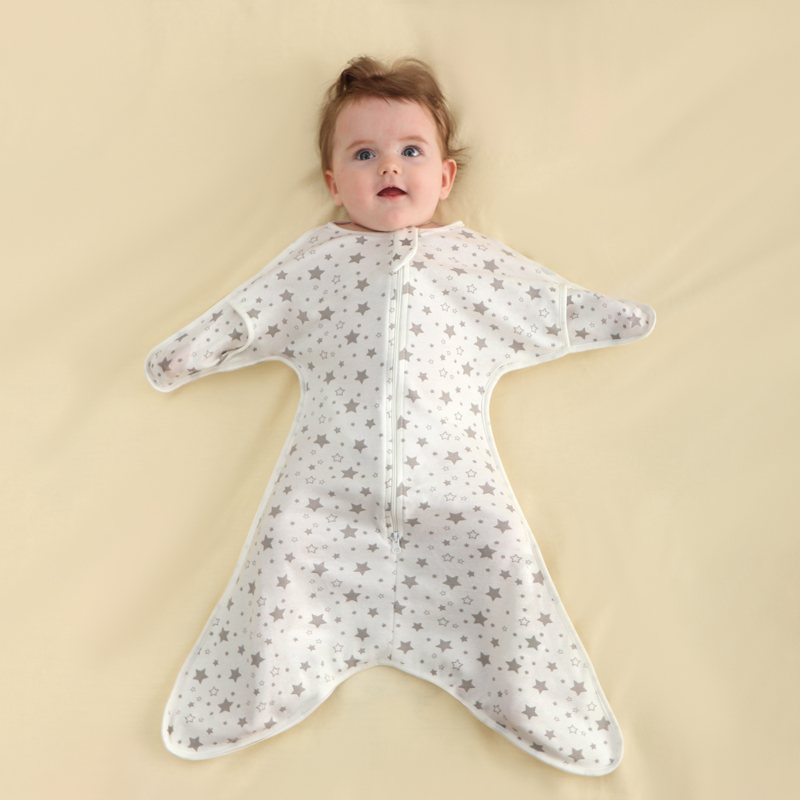
Development runs in six steps: a spec sheet, a reference sample or tech pack, a fit sample, a pre-production sample, a sealed sample, and bulk with inspection. Each step should end with a document or a physical object you keep. That is what makes a repeat order repeatable and a problem traceable.
What you need before the first sample
Most first samples are wasted because one of four inputs is missing. None of them is expensive; all of them are cheaper to supply now than to correct after a sample is cut.
| Input | Why it matters | If you do not have it |
|---|---|---|
| A reference sample | Sets hand-feel, weight and trim quality faster than any written description | Say so. We will quote from a stock construction instead of guessing at yours |
| Target size range | Decides the grade rule, the pattern and the fabric consumption | Start with two sizes and extend on the repeat order |
| TOG or warmth intent | TOG is a property of the finished build, not of the shell | Describe the season and the room it is sold for; we will propose builds to test |
| Label and packaging artwork | Label run and pack format often set the binding minimum | Quote with stock packaging first, then price the custom pack separately |
You do not need a finished tech pack to start. You do need to be clear about which of the four above you are deciding and which you are delegating.
The six steps, and what each one decides
- Spec sheet. One page: style, fabric, TOG intent, size set, closure, label, packaging, destination market. This is the document everything else is checked against.
- Feasibility and quote. We come back with the four minimums separately, the construction we would actually run, and the test scope the destination market implies.
- Fit sample. Made in the agreed fabric on the agreed pattern. It answers fit and proportion, not production quality.
- Pre-production sample. Made with the actual bulk fabric, trims and label. This is where zip, seam and label placement problems surface.
- Sealed sample. Signed by both sides and kept. Bulk is measured against this object, which is why it is the single most useful thing in a dispute.
- Bulk and inspection. Inline checks during production and a final inspection against the sealed sample and the points of measure.
Two of these are routinely skipped: the spec sheet and the sealed sample. They are also the two that decide whether a second order takes days or weeks.
The spec fields that actually move the price
A sleep sack spec sheet can run to forty fields. Six of them carry most of the cost, and they are the six worth arguing about before sampling rather than after.
| Field | What it changes |
|---|---|
| Layer structure | Shell plus wadding plus lining: the main cost and the main TOG lever |
| Zip type | One-way, two-way, length, puller style, guard construction |
| Size set | Each size is a separate cut and a separate line setup |
| Colourways | Stock shade versus dye lot; each colourway carries its own minimum |
| Print method | Placement versus all-over, and the number of colours in the artwork |
| Packaging | Polybag, header card, belly band or printed box; each has a print run |
If a quote arrives without these six being fixed, it is an estimate, not a quote. That is not a criticism of the supplier; it is a statement about how much the number can move.
Where private label projects stall
Artwork arrives after sampling. Print changes hand-feel and can change shrinkage, so a printed sample is not the same product as a plain one. Print before the pre-production sample, not after.
The label is treated as an afterthought. Care label content depends on the fibre and the market, and the main label position affects seam construction. Both belong in the spec sheet, not in the week before shipment.
Nobody owns the sealed sample. If only the supplier holds it, the reference for bulk is the supplier’s memory. Keep a signed duplicate.
What to send us
- The style or reference sample, and what you want changed about it
- Size range and the size you consider the fit reference
- Fabric direction, or the season and room the product is sold for
- Label and packaging requirements, including the destination market
- Quantity by style, colour and size, even if approximate
With those five, a feasibility answer is possible before any sample is cut. Without them, the first sample becomes the conversation, which is the expensive way to have it.
| Field | Example value | Why it is on the sheet |
|---|---|---|
| Style | Sleeveless sleep sack, two-way zip, zip guard | Fixes the operations before sampling |
| Shell | 100% cotton jersey, 160 gsm | Fibre and weight, not “cotton” |
| Wadding | 120 gsm polyester, needle-punched | The main TOG lever and a cost line |
| Lining | Cotton jersey, 140 gsm | Determines hand-feel against the skin |
| Size set | 0–6, 6–12, 12–18, 18–24 months | Four cuts, four line set-ups |
| Pack | Belly band + polybag | The band carries its own print run |
Illustrative values, not a stock product — they show the level of detail a spec sheet needs. Missing any one of these six, the first quote is an estimate and the first sample is a conversation.
What we can put in front of you
Evidence for the points above, in the form a buyer can check rather than take on trust:
- Fit sampleCut in the agreed fabric on the agreed pattern. It signs off fit and proportion only — not bulk quality.
- Pre-production sampleBulk fabric, bulk trims, bulk label. This is the sample that catches zip, seam and label placement.
- Sealed sampleSigned and dated by both sides, one copy held by each. Bulk is measured against this object, not against memory.
- Points of measurePer size, with tolerances, issued with the spec sheet rather than after the sample.
From the question to a quote
- 1This guide — the decision behind the question, in the abstract.
- 2Baby sleep sacks — the construction, fabric and size specifications it applies to.
- 3All product lines — if the programme spans more than one line in the same shipment.
- 4Request a quote or a sample — send the fabric, the size set and the expected quantity.
Sources and standards
- US Federal Trade Commission — Threading Your Way Through the Labeling Requirements Under the Textile and Wool Acts (16 CFR Part 303)
- 16 CFR Part 1615 — Standard for the Flammability of Children’s Sleepwear, Sizes 0 Through 6X (eCFR)
Links go to the issuing body’s own publication. Where a rule differs by market, the market is named in the text above; nothing here is a statement that a specific product is certified.
Frequently asked questions
Do I need a tech pack to start?
Who owns the pattern?
Can you copy a branded sleep sack I bought at retail?
How many samples before bulk?
Related
- Private label: six stages and deliverables
- What affects the cost of custom sleep sacks
- Sleep sack MOQ explained
Send three things, get a real answer
Fabric or construction direction, the size set you are planning, and the quantity you expect for a first order. Approximate is fine — the point is to quote against your programme rather than against an average. If you already have a reference sample or a spec sheet, send that instead and we will work from it.